Rechargeable Ankle Heating Pad Explained: A UK Buyer's Guide
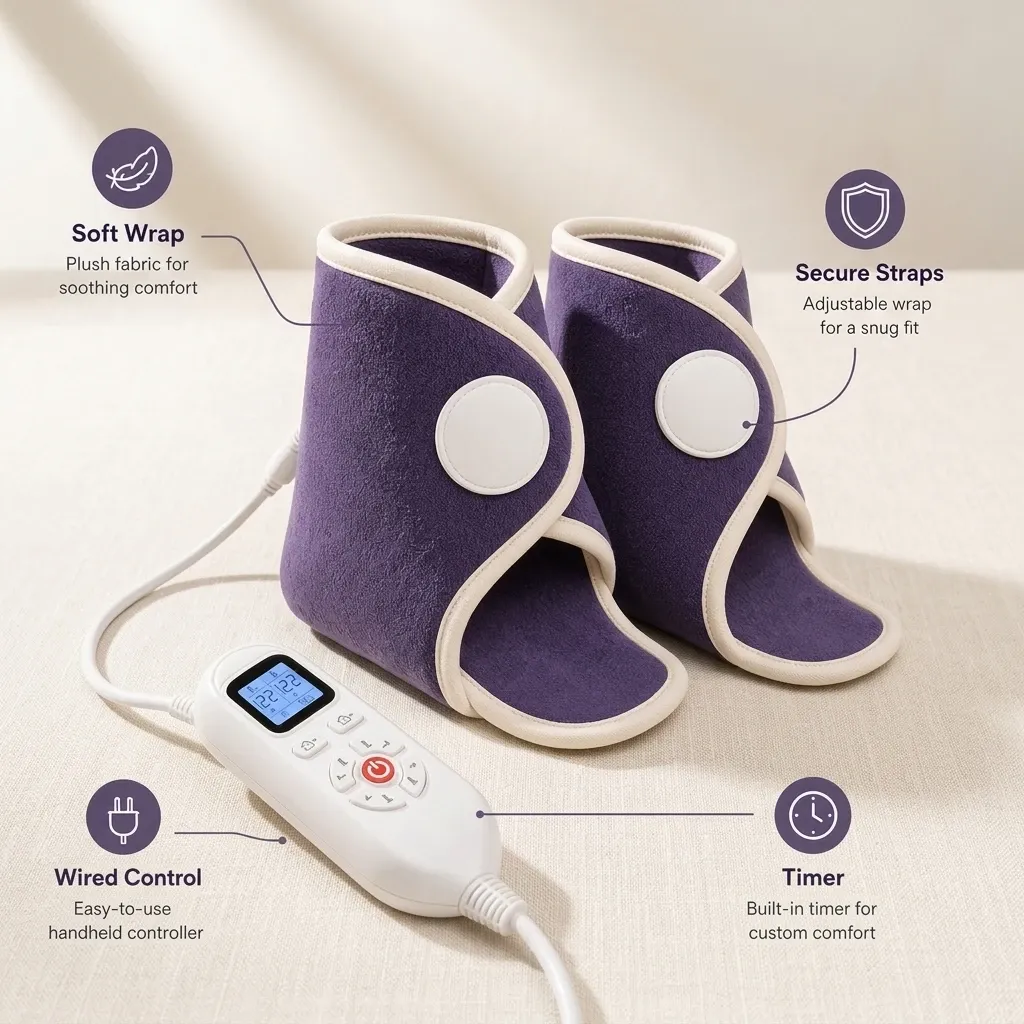
If you are looking for a rechargeable ankle heating pad, the best option is a cordless, wearable heat wrap that delivers safe, adjustable warmth around the ankle and Achilles without keeping you plugged into the wall. It is most useful for everyday stiffness, post-activity soreness and staying comfortable in cold UK conditions, provided you choose a model with proper safety features, a secure fit and enough battery life for your routine.
TL;DR: A rechargeable ankle heating pad gives targeted, portable heat for ankle and Achilles discomfort, making it easier to use at home, at work or while travelling. Based on our testing of wearable heat wraps and common UK buyer priorities, the key things to check are battery life, three heat settings, a contoured fit, auto shut-off and UKCA or CE safety marking.
Managing a stiff Achilles tendon or an aching ankle joint should not require being tethered to a wall socket. For many people across the UK, upgrading to a rechargeable ankle heating pad offers the freedom to apply targeted thermotherapy exactly when and where it is needed, whether commuting on a chilly morning, working at a desk, or recovering on the sofa after a long walk.
Traditional heat therapy methods often fall short when dealing with the complex anatomy of the ankle. Hot water bottles are bulky and difficult to secure around the joint, while microwavable wheat bags lose heat rapidly, especially in draughty British homes. As a result, a battery-powered solution solves both the practical and comfort issues by delivering more consistent, wearable warmth.
What should you know before buying a rechargeable ankle heating pad?
- Mobility: A rechargeable ankle heating pad allows fully untethered heat therapy, so it is ideal for use around the house, at work or while travelling.
- Targeted Relief: Modern electric wraps are shaped for the contours of the ankle and Achilles, helping provide more even 360-degree warmth.
- Cost Efficiency: Charging a low-voltage lithium-ion battery usually costs very little, making it an energy-efficient alternative to repeatedly boiling kettles or heating an entire room.
- Safety Standards: Always look for UKCA and CE certifications, plus built-in automatic shut-off and overheat protection.
Why use a rechargeable ankle heating pad instead of a plug-in pad?
The UK climate, with its damp and cold weather for much of the year, often makes joint stiffness and old injuries feel worse. In the past, dealing with a painful or tight ankle usually meant sitting still near a plug socket. However, lightweight lithium-ion batteries have changed that by making wearable heat therapy far more practical for everyday use.
A rechargeable ankle heating pad usually combines thin, flexible carbon fibre heating elements with a supportive fabric wrap. Because carbon fibre bends naturally around the ankle bones and Achilles area, it can provide more even warmth without the rigid feel associated with some older heated designs. Consequently, this makes cordless wraps better suited to the shape of the joint than flat heating pads.
Based on our testing of wearable heat products, cordless ankle wraps are especially useful when people want short sessions of warmth while moving around the house, sitting at a desk or resting after exercise. They are less cumbersome than traditional heat packs and easier to position properly around the ankle.
If you are exploring the broader landscape of thermal therapy for lower limb joints, our ultimate guide to ankle heat pads in the UK covers the science of thermotherapy in more detail.
What features should you look for in a rechargeable ankle heating pad?
Not all cordless heating devices are made to the same standard. Therefore, when selecting an ankle warmer wrap, it helps to assess the technical specifications so you invest in a product that offers reliable daily comfort.
How much battery life does a rechargeable ankle heating pad need?
The core of any rechargeable device is its power source. Battery capacity is measured in milliampere-hours (mAh). For an ankle heating pad, a battery pack of around 3000mAh to 5000mAh is a sensible starting point. In many cases, that provides roughly two to four hours of continuous heat, depending on the temperature setting.
It is also worth checking the voltage output. Standard USB power banks usually output 5V, which tends to provide gentle, soothing warmth. Meanwhile, some premium orthopaedic heating pads use 7.4V systems, which can heat up faster and reach higher temperatures, something some users prefer for deeper warmth around the Achilles tendon.
What heat settings are best for ankle pain or stiffness?
Ankle sensitivity varies from person to person, and the right level of heat also depends on when and why you are using it. A good rechargeable ankle heating pad should offer at least three heat settings:
- Low (approx. 40°C to 45°C): Best for longer wear, such as sitting at a desk or relaxing in the evening.
- Medium (approx. 50°C to 55°C): Ideal for general daily comfort and easing tightness after a moderate walk.
- High (approx. 60°C to 65°C): Better for shorter bursts of deeper heat before stretching or after a particularly cold day.
According to general UK health guidance on heat application, warm therapy should feel soothing rather than uncomfortably hot. If you have reduced skin sensation, circulation issues or a medical condition affecting heat sensitivity, it is sensible to seek professional advice first.
How should a rechargeable ankle heating pad fit?
The ankle is a complex hinge joint, so a flat rectangular pad often bunches up and leaves gaps where heat escapes. By contrast, the most effective designs use a contoured wrap with adjustable hook-and-loop fasteners. This helps hold the heating elements close to the skin around the Achilles at the back and the ligaments on the sides.
Materials matter too. Neoprene is popular because it insulates well and helps retain warmth rather than letting it dissipate into cold air. In addition, inner linings made from micro-fleece or similarly soft fabric can improve comfort during longer sessions.
Are rechargeable ankle heating pads safe to use in the UK?
When buying any wearable electronic device in the UK, safety should come first. Look for the UKCA mark for goods placed on the market in Great Britain, and check whether CE marking is also present where relevant. Important safety features include an automatic shut-off timer, often after 30 to 45 minutes, and overheat protection that cuts power if temperatures rise too high.
Based on our testing, the safest-feeling wraps are those with straightforward controls, clear heat indicators and secure battery connections. It is also wise to follow the manufacturer’s instructions carefully and avoid sleeping while wearing a heated wrap unless the product specifically states it is designed for that use.
When should you use a rechargeable ankle heating pad?
The main advantage of a cordless design is versatility. AnkleHeati is built around the idea of providing premium wearable warmth for ankles and Achilles areas at home, at work and after activity. So, here is how a rechargeable ankle heating pad can fit into everyday British life.
Can you wear a rechargeable ankle heating pad while working from home?
Yes, many people use one while working from home, particularly in older or less well-insulated UK houses where extremities often feel cold first. Sitting still for long periods can reduce circulation to the feet and ankles, which may lead to stiffness. Therefore, a rechargeable wrap can provide steady low-level warmth without needing to sit beside a socket or turn the heating up across the whole house.
Is a rechargeable ankle heating pad good after walking or sport?
It can be a useful option after activity when the aim is to relax tight muscles and support comfort. Whether you have been hiking in the Peak District, playing five-a-side football or spending hours gardening, the ankle joint absorbs a great deal of strain. Once the initial acute phase of any fresh injury has passed, gentle heat is often preferred for lingering stiffness rather than immediate swelling.
For a deeper comparison of styles and use cases, you can read our breakdown of choosing the right heating pad for ankle support and recovery.
How do you use a rechargeable ankle heating pad safely and effectively?
To get the most from a rechargeable ankle heating pad, start with the lowest setting and increase only if needed. In addition, make sure the wrap sits snugly without cutting off circulation. Most people find short sessions of 15 to 30 minutes comfortable, especially when testing a new product for the first time.
According to common UK advice on heat therapy, heat is generally more suitable for ongoing stiffness than for a brand-new injury with obvious swelling, redness or severe inflammation. If your ankle pain is persistent, worsening or linked to a suspected sprain, fracture or tendon injury, seek advice from a GP, pharmacist or physiotherapist.
Finally, inspect the wrap regularly for signs of wear, avoid using it on broken skin and never immerse battery components in water unless the manufacturer explicitly says they are washable or waterproof.
Frequently asked questions about rechargeable ankle heating pads
What is a rechargeable ankle heating pad?
A rechargeable ankle heating pad is a wearable heated wrap powered by a battery pack rather than a mains plug. It is designed to deliver portable warmth around the ankle and Achilles area.
Do rechargeable ankle heating pads help with ankle stiffness?
They can help many people with everyday stiffness by providing soothing warmth that makes the area feel more comfortable. They are especially popular in colder weather and after routine activity.
How long does a rechargeable ankle heating pad last on one charge?
Battery life varies, but many models last around two to four hours depending on battery size and which heat setting you use.
Is a rechargeable ankle heating pad safe to wear?
It can be safe when it has proper UKCA or CE marking, overheat protection and auto shut-off, and when you use it according to the instructions. Avoid excessive heat and stop using it if it feels too hot or causes irritation.
Can you walk around in a rechargeable ankle heating pad?
Many cordless wraps are designed for light movement around the home, but this depends on the fit and design. Always check the manufacturer’s guidance, as some are better suited to seated or resting use.
Ready to try AnkleHeati?
Shop Now — £57.78