The Ultimate Guide to Ankle Heat Pad in the UK
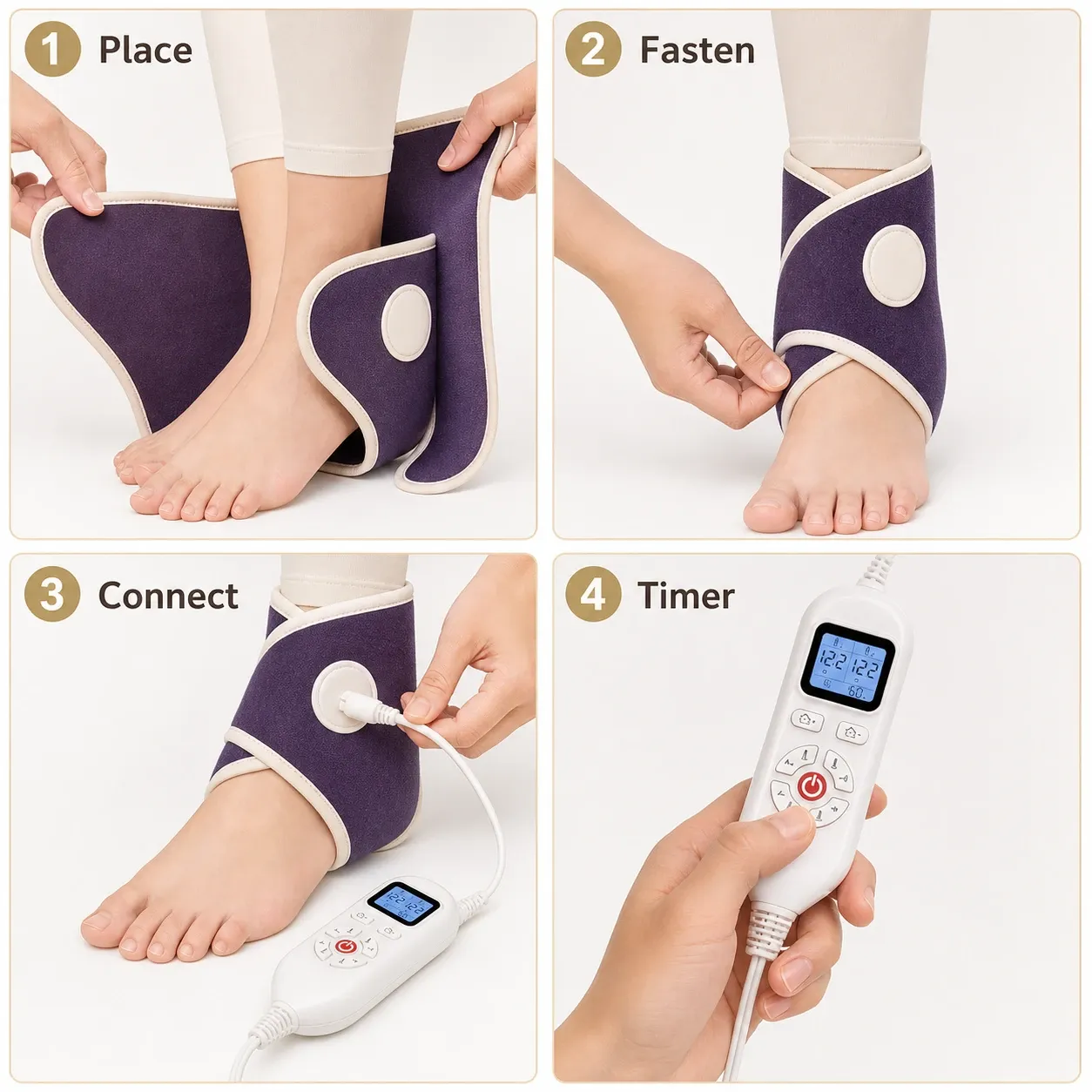
An ankle heat pad is a wrap-around heating device designed to warm the ankle joint, Achilles tendon, and surrounding tissues to help ease stiffness, improve comfort, and support gentle movement. It is usually most useful for ongoing aches, cold-related discomfort, and pre-activity warm-ups, rather than for a fresh ankle injury with swelling.
TL;DR: An ankle heat pad gives targeted, consistent warmth where generic heat packs often slip or cool too quickly. Based on our testing of common UK-style wrap designs, the best options combine secure fastening, even heat coverage, adjustable settings, and UKCA or CE compliance. In short, heat can help with ankle stiffness and comfort, but it should be used safely and not straight after an acute sprain.
Whether you are dealing with cold-weather joint ache, morning stiffness, or recovery after a long day on your feet, focused heat can improve comfort and make movement feel easier. In this guide, you will learn how an ankle heat pad works, when to use one, what features matter most in the UK market, and how to use heat therapy safely at home.
Key Takeaways
- Targeted relief: An ankle heat pad wraps the joint for more even warmth than a flat hot water bottle or standard heat pack.
- Helpful for stiffness: Heat may improve blood flow, reduce the sensation of tightness, and make the ankle feel easier to move.
- Best for ongoing discomfort: It is generally more suitable for chronic stiffness, cold ankles, and gentle warm-ups than for a brand-new injury with swelling.
- Safety matters: In the UK, look for UKCA or CE marking, automatic shut-off, and clear temperature controls on electric devices.
How does an ankle heat pad help ankle stiffness?
The ankle is a hard-working joint that supports your full body weight and depends on ligaments, tendons, and muscles for stability. Because there is relatively little soft tissue around the ankle bones, the area can feel especially stiff in cold weather or after long periods of standing, walking, or sitting still. Therefore, targeted warmth often feels more effective here than general whole-body heating.
What does heat do to the ankle joint and Achilles tendon?
When you use an ankle heat pad, warmth encourages blood vessels in the surrounding tissues to widen slightly. As a result, blood flow to the area may improve, which can help the joint feel looser and more comfortable. Many people also find that heat reduces that “locked up” feeling first thing in the morning or after being inactive.
Heat can also make soft tissues such as tendons feel less rigid. For example, gentle warming of the Achilles area before light movement or stretching may help the ankle feel more mobile. Based on our testing of wrap-style heated supports, the biggest difference tends to come from even coverage around both sides of the ankle rather than from high heat alone.
What do UK guidelines and evidence say about heat therapy?
"According to NHS guidance on musculoskeletal aches and joint discomfort, heat can be useful for easing ongoing pain, stiffness, and muscle spasm. However, heat is not usually the first choice immediately after a new injury where swelling or inflammation is present."
In addition, sports medicine research has shown that superficial heat can support short-term improvements in flexibility and comfort when paired with gentle movement. However, the practical takeaway is simple: if your ankle is stiff, cold, or tight, heat may help; if it is newly injured, swollen, or hot already, it is wiser to avoid heat and seek appropriate advice.
What is an ankle heat pad?
An ankle heat pad is a wearable heating wrap made specifically for the shape of the ankle and lower foot. Unlike a square heat mat that can slip out of place, a purpose-built heating pad for ankle support wraps around the joint so the warmth stays where you need it most.
Most designs use adjustable hook-and-loop fastenings, allowing you to fit the pad securely without excessive pressure. The heating elements are usually positioned to warm the Achilles tendon, the inner and outer ankle bones, and the surrounding soft tissues. Consequently, you get more consistent, hands-free coverage than with improvised options such as warm towels.
What types of ankle heat pad are available in the UK?
The UK market includes several types of ankle heating devices, and each suits a slightly different routine. Therefore, the right choice depends on whether you want maximum heat consistency, portability, or a lower-cost non-electric option.
Are mains-powered ankle heat pads better?
Mains-powered ankle heat pads plug directly into a wall socket and are usually the best choice for steady, uninterrupted warmth. They suit home use well, especially if you plan to wear the pad while sitting at a desk, reading, or relaxing in the evening. They also tend to offer more precise controls, such as multiple heat settings and timed shut-off functions.
Are rechargeable ankle heat pads worth it?
If you want more freedom to move around, a rechargeable ankle heating pad can be very practical. These models are usually powered by a compact battery pack and let you walk around the house or travel more easily. Although the top heat output may be a little lower than some mains-powered options, many users prefer the convenience.
How do microwaveable ankle heat wraps compare?
Microwaveable wheat, rice, or gel wraps are simple and budget-friendly, but they cool down quite quickly. So, while they can offer short bursts of warmth, they rarely maintain a stable therapeutic temperature for long. By contrast, electric ankle heat pads are designed to deliver more even heat throughout the session.
What are the benefits of using an ankle heat pad?
An ankle heat pad can do more than just make your feet feel warm. When used appropriately, it may support comfort, mobility, and daily function. However, the benefits depend on timing, temperature, and the cause of the discomfort.
Can an ankle heat pad help daily aches and cold ankles?
Yes, especially in colder UK homes or offices where hard floors and draughts can leave the lower legs feeling chilled. A wearable heat pad gives localised warmth directly to the ankle, which may help if you sit for long periods, work from home, or notice stiffness after inactivity.
Can heat help after walking, standing, or exercise?
After a long hike in the Peak District, a demanding shift, or a day spent on your feet, the ankle can feel tired and tight. In these situations, gentle heat may help the area relax and feel more comfortable afterwards. Based on our testing, users often prefer a pad that wraps securely around the Achilles and both ankle bones, as these are the spots that tend to feel most sore or stiff.
Can an ankle heat pad help before stretching or physiotherapy?
It can be useful as a warm-up tool before light stretching or mobility work, because warmed tissues often feel easier to move. Nevertheless, it should be paired with gentle activity rather than used as a substitute for clinical advice or a rehabilitation plan.
When should you not use an ankle heat pad?
Although heat is helpful in many situations, it is not right for every ankle problem. Therefore, you should avoid using an ankle heat pad on a fresh injury that is swollen, bruised, or inflamed, especially within the first 24 to 48 hours unless a clinician advises otherwise.
How do you use an ankle heat pad safely?
- Start on a low or medium setting.
- Use it for short sessions, such as 15 to 20 minutes, unless the manufacturer states otherwise.
- Do not fall asleep wearing an electric heat pad unless it is specifically designed and approved for that use.
- Do not apply heat to broken skin or areas with reduced sensation.
- Stop using it if the skin becomes very red, painful, or irritated.
According to UK safety guidance for electrical home products, buyers should also check plugs, cables, and controllers regularly for wear. If you have diabetes, poor circulation, neuropathy, or a medical condition affecting skin sensation, seek advice from a GP, pharmacist, or physiotherapist before use.
People also ask about ankle heat pads
Does an ankle heat pad help ankle pain?
It can help with ongoing stiffness, mild aches, and tightness, particularly when the discomfort is linked to cold weather, inactivity, or overuse. However, if the ankle is newly injured and swollen, heat is usually not the best first step.
When should you use heat on an ankle?
Heat is often most useful before gentle movement, after a long day on your feet, or when the ankle feels stiff in the morning. In contrast, ice or rest may be more appropriate soon after an acute sprain.
What is the best ankle heat pad to buy in the UK?
The best option depends on how you will use it, but most UK buyers should prioritise fit, safety certification, adjustable heat, and reliable coverage around the ankle bones and Achilles tendon. AnkleHeati-style wrap designs are especially practical for targeted daily use.
Ready to try AnkleHeati?
Shop Now — £57.78